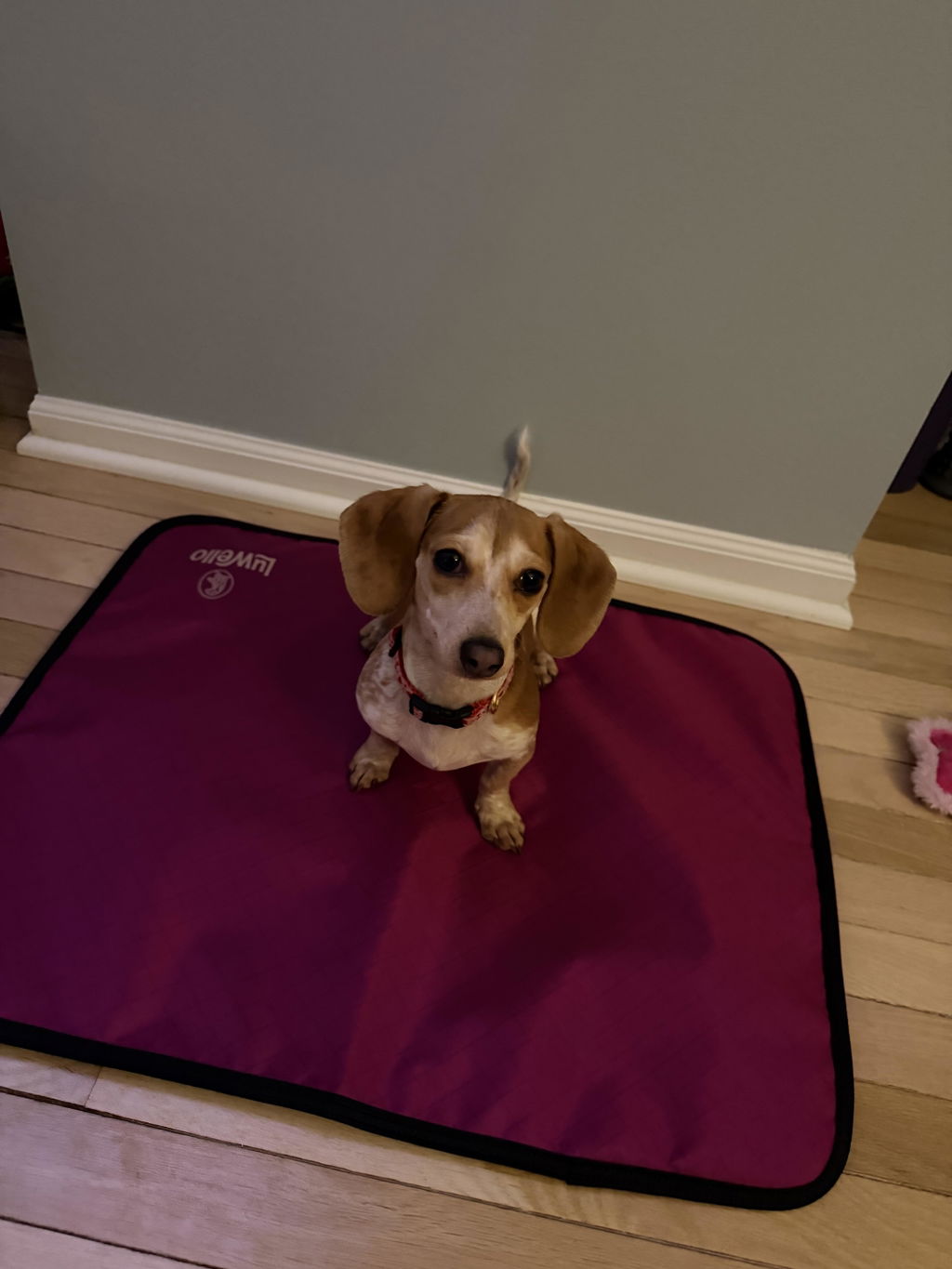
How to Train Your Dog to Settle on a Mat

To train your dog to settle on a mat, reward them for stepping onto it, then for lying down on it, then slowly stretch out how long they stay. Add a cue word once the behavior is reliable, then practice in new rooms and new places. Short, treat-based sessions are all it takes to get started.

Most dogs enjoy this one. It is a game with a clear goal, the rewards come fast, and the skill shows up in everyday life: while you cook, when the doorbell rings, at the vet, and on a cafe patio.

Why mat training is worth your time

A mat answers a question your dog asks all day: what should I be doing right now? The payoff goes well past the mat itself.

A calm default for busy moments

Calm is a learned skill. Oregon Humane notes that dogs are not naturally good at managing their own excitement, and that teaching settle on cue gives them a way to switch off. Once your dog knows the routine, you can send them to the mat while you cook, work, or have friends over.

Easier vet visits

A dvm360 guide to fear-free vet visits lists a down-stay on a mat as a foundation behavior, because it gives your dog a defined place to rest instead of pacing the waiting room.

Public outings that feel manageable

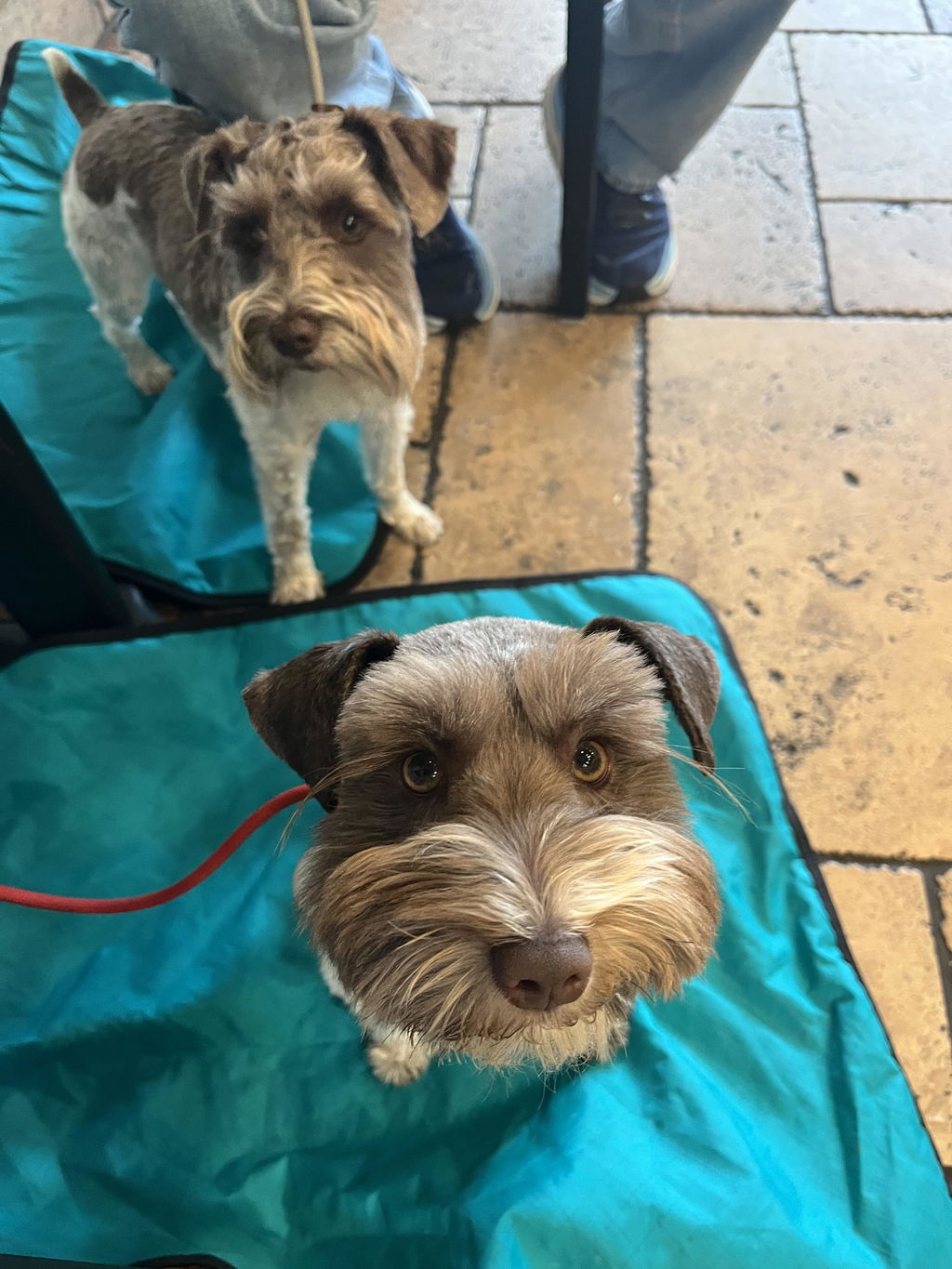
Restaurants, breweries, patios, training classes, hotel rooms, and friends' houses all get simpler when your dog has a spot that means the same thing everywhere. The mat travels, and so does the expectation.

A replacement for habits you do not want

Spot & Tango points out that going to the mat can replace things like barking and rushing the door when the bell rings, and that clear expectations can reduce confusion for your dog.

The Karen Pryor Academy also describes settle on a mat as especially useful for service dogs, since a portable mat gives them a safe place to settle anywhere.

How to train your dog to settle on a mat, step by step

What you need

  • A mat your dog does not already use as a bed. Use a special mat only for training so it stays a positive, meaningful place.
  • Small, soft treats your dog loves.
  • A quiet room with few distractions, and about five minutes.
  • No perfect down or stay required. A dog who already knows down will just move faster.
  1. Make the mat the best thing in the room

    Put the mat on the floor and wait. When your dog looks at it, sniffs it, or steps toward it, reward right away. Toss the treat a few feet off the mat so your dog has to leave and come back. That small reset is what makes dogs start choosing the mat on their own. Karen Pryor Academy's lesson builds the behavior this way, paws first.

  2. Build up to all four paws

    Reward one paw on the mat, then two, then three, then four. Move on only when your dog offers the current step every time.

  3. Ask for a down

    Once all four paws are on the mat, wait for a sit or down. Lure with a treat if your dog needs help. Deliver the treat between their front paws, on the mat, so the mat is where good things happen.

  4. Add a cue word

    Wait until your dog is heading to the mat and lying down without help, then name it. Pick one word, such as mat or settle, and use it every time. Naming it too early just attaches the word to guessing.

  5. Stretch out the time

    Space your treats out gradually. Oakland Animal Services suggests moving from frequent rewards to every 20 seconds, then every 30. Add a release word, like okay, and say it before your dog gets up on their own. A long-lasting chew can help dogs who find stillness hard.

  6. Add distance

    Take one step back and reward. Then two. Then walk around the mat. The goal is a dog who stays put while you move, because that is what real life looks like. The Wildest recommends growing distance in small increments for the same reason.

  7. Take the mat on the road

    Move the mat to another room, then the kitchen while you cook, the front door, the porch, a friend's house, a patio. Change one thing at a time and bring higher-value treats as distractions go up. If your dog falls apart somewhere new, go back to an easier spot and build again. Between sessions, pick the mat up so it stays special, as Rover suggests.

Dog settled on a Luwello settle mat at a campsite

Settle, place, go to mat: what is the difference?

These terms get mixed up, and trainers use them slightly differently. Place or go-to-mat usually means sending your dog to a spot and having them stay until released. Settle usually means teaching your dog to relax when you relax, so the mat becomes a cue for calm and not just a spot to stand on. Rover draws that line clearly.

You do not have to pick one. Teach going to the mat first, then build the settle on top of it. That is the order in the steps above.

When mat training stalls

Almost every sticking point comes down to the same fix: make it easier, reward more, and shorten the ask.

My dog will not stay on the mat

You are probably asking for too much too soon. Shorten the time, reward more often, and release before your dog gets up on their own. Oregon Humane's guidance is to shorten the settle, and to consider that a dog who cannot lie still at all may simply have too much energy right now.

My dog is too excited to settle

Try a short walk or a quick sniffing game first, then start while the edge is off. Keep early sessions brief and calm. If you find yourself repeating the cue, the session is too hard. Make it easier.

My dog keeps leaving the mat

Raise the rate of treats and make sure the mat is the most rewarding place in the room. If your dog leaves to follow you, practice with you sitting still first, then add movement slowly.

My dog is great at home but loses it in public

That is normal. Dogs do not generalize automatically. Practice somewhere mildly interesting, like your driveway or a quiet porch, before a busy patio.

The mat slides on my floor

A mat that shifts underfoot can make some dogs reluctant to commit. On tile, hardwood, or in a car, a grip-backed mat stays where you put it.

My dog seems fearful or very anxious in new places

Mat training can be one useful piece of a calmer routine, but it is not a replacement for professional help. If your dog is fearful, reactive, or panics when left, talk to your vet or a certified trainer or behavior consultant.

Pick a mat you will actually bring along

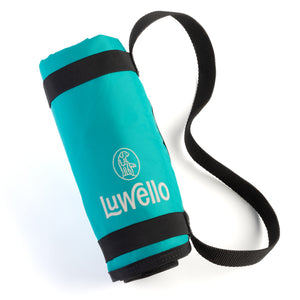
Training works best when the same mat shows up in every setting. That means it has to be easy to carry, easy to clean, and big enough for your dog to fully relax. Both Luwello settle mats are made in the USA with recycled materials, come with a removable carry strap, and come in small, medium, and large. 10% of settle mat sales support canine cancer research through Ethos Discovery's E-PUSH program.

Ultralight Portable Dog Settle Mat: Water-Resistant, USA-Made Place Training Mat

Ultralight Dog Settle Mat

Rolls up small and goes everywhere. The one for hiking, travel, and everyday outings.

Non-Slip Settle Mat: Grip backing

Non-Slip Settle Mat

Grip backing keeps it put on tile, hardwood, car seats, and boats. Good for training on slick floors.

Compare all settle mats

"We take them everywhere with us and our dogs now know they need to be seated in them when at restaurants and cafes." — M.M., verified Luwello review

Want the steps on your phone?

Grab the free Settle Mat Training download and keep it handy while you practice.

Get the free training download

Frequently asked questions

How long does it take to train a dog to settle on a mat?

It varies by dog, age, and how exciting the environment is. Many dogs learn to step onto the mat quickly. Building a long, relaxed settle and taking it to new places takes more practice. Short daily sessions work better than one long one.

How long should a mat training session be?

A few minutes. End while your dog is still engaged and succeeding.

Can I mat train a puppy?

Yes. Keep sessions very short, reward often, and expect your puppy to need plenty of repetition.

Can an older dog learn to settle on a mat?

Yes. Older dogs usually do well with this skill, since it asks for calm rather than athleticism.

Do I need a clicker?

No. A marker word like 'yes' works fine, as long as you say it at the instant your dog does the right thing and follow it with a treat.

Can I use any mat to teach settle?

Yes. Dogs can learn the behavior on a bath mat, a yoga mat, or a towel. What changes with a purpose-built mat is how well it holds up to daily practice and how easily it comes with you. A mat that rolls up, wipes clean, and has clear edges is one you will actually bring to the cafe. Our guide to settle mats vs. travel dog mats covers the difference.

Should the settle mat be different from my dog's bed?

Generally yes. Keeping the training mat separate helps it keep its meaning. See our guide to settle mats vs. dog beds.

What is the difference between a settle mat and an anxiety vest?

They do different jobs. See our comparison of a settle mat and a dog anxiety vest.