
Dog Skin Cancer: Signs Every Owner Should Know
Compartir
Dog Skin Cancer: Signs, Types, and How to Help Protect Your Dog
Most dog owners know to watch for limping, lethargy, or changes in appetite. Fewer think to check their dog's skin — and that's a problem, because skin tumors are among the most frequently diagnosed cancers in dogs.
The good news: skin cancer is also one of the cancers where early detection matters most. A tumor caught and removed before it spreads can, in some cases, be curative. A tumor ignored for months is a different conversation entirely.
Here's what you actually need to know — the types, the warning signs, how diagnosis works, and what you can realistically do to reduce your dog's risk.
How Common Is Cancer in Dogs?
The numbers are hard to sit with. According to the Veterinary Cancer Society, 1 in 4 dogs will develop malignant cancer in their lifetime. For dogs over 10 years old, that figure climbs to 1 in 2. In the United States, approximately 6 million new canine cancer diagnoses are made every year.
Cancer is now the leading cause of death in adult dogs.
What Is the Most Common Cancer in Dogs?
Lymphoma — cancer of the lymph nodes and lymphatic system — accounts for an estimated 24% of all cancers diagnosed in dogs, making it the most commonly diagnosed canine cancer in major studies. It's a cancer that affects both the blood and the body's lymphatic system, and it shows up in multiple forms, each with different treatment options and outcomes.
That said, when it comes to skin specifically, the story is different. Mast cell tumors are the most common form of skin cancer in dogs. They develop in the mast cells of the immune system and can appear almost anywhere on the body — which makes them easy to miss and easy to misidentify as a minor bump or irritation.
What Is the Deadliest Cancer for Dogs?
Hemangiosarcoma. It's a cancer that forms in the cells lining blood vessels, and it is aggressive in a way that is difficult to overstate.
A 2024 study from the Royal Veterinary College found that the median survival time for dogs diagnosed with hemangiosarcoma in general practice was just 9 days — across all cases, including those that received treatment. Research from the University of Minnesota's Modiano Lab found that more than 50% of dogs with hemangiosarcoma die within four to six months, and almost 90% die within a year.
What makes it particularly devastating is that it often shows no symptoms until a tumor ruptures internally, causing sudden collapse. By the time an owner realizes something is wrong, the cancer has frequently already spread.
Hemangiosarcoma most commonly affects the spleen, heart, and liver — but a cutaneous (skin) form does exist, and it carries a meaningfully better prognosis than the internal forms. Cutaneous hemangiosarcoma is often linked to UV exposure, particularly in dogs with light skin, thin coats, or sparsely haired areas like the belly. When caught early and surgically removed, dogs can survive years beyond diagnosis.
This is one of the reasons sun safety matters more than most dog owners think.
Dog Skin Cancer: The Types You Should Know
Mast Cell Tumors
The most common skin cancer in dogs. Mast cells are part of the immune system, and when they multiply abnormally, they form tumors that can appear almost anywhere — the trunk, limbs, head, and neck. They vary wildly in appearance: some look like soft, harmless lumps; others are red, ulcerated, or firm. Certain breeds have a genetic predisposition, including Boxers, Pugs, Boston Terriers, and Bulldogs.
Squamous Cell Carcinoma (SCC)
This is the skin cancer with the clearest link to sun exposure. It develops in the outer layers of the skin and tends to appear in areas where UV radiation can reach directly — the belly, nose, ears, and lower legs. Dogs with light-colored skin, thin coats, or short fur are at higher risk. It can look like a wart, a raised lump, or an open sore that doesn't heal. An early-stage SCC can easily be mistaken for a minor wound.
Malignant Melanoma
In dogs, melanoma behaves differently than it does in humans. The sun-to-melanoma connection is less direct in canines — melanomas often appear in areas not exposed to UV, like inside the mouth or on the nail beds. Oral melanomas spread rapidly to lymph nodes and lungs. Nail bed melanomas often present first as toe swelling, toenail loss, or unexplained limping, and are frequently misdiagnosed as infections.
Cutaneous Hemangiosarcoma
Unlike its internal counterpart, the skin form of hemangiosarcoma is often linked to UV exposure and tends to appear on the belly or other lightly haired areas. It's the form with the most hopeful prognosis — surgical removal, especially when caught early, can sometimes be curative.
Signs of Cancer in Dogs: What to Look For
Regular, hands-on checks of your dog's skin are one of the simplest things you can do for their long-term health. Run your hands over their entire body — including the belly, between toes, inside the ears, and around the mouth — at least once a month. Here's what to flag immediately with your vet:
- New lumps or bumps, especially ones that have appeared suddenly or are growing
- Sores, wounds, or scabs that don't heal within two weeks
- Firm, raised, wart-like growths
- Changes in an existing mole or pigmented area
- Redness, swelling, or discharge around a skin area
- Unexplained hair loss in a specific spot
- Swollen toes, toenail loss, or limping (possible nail bed melanoma)
- Black or pink masses around the mouth or lips
- Your dog consistently licking or chewing one spot on their body
None of these are automatic cancer diagnoses — many lumps are benign. But all of them warrant a vet visit, not a wait-and-see approach.
How Is Dog Cancer Diagnosed?
When a vet finds a suspicious lump, the first step is usually a fine needle aspiration (FNA). A thin needle is inserted into the mass to collect cells, which are then examined under a microscope. The procedure is minimally invasive, typically requires no sedation, and costs roughly $25–$200. It's an efficient first screen — but it has limits.
Some tumor types, particularly sarcomas, don't shed cells easily into the needle, which can make results inconclusive. If the FNA doesn't provide a clear answer — or if the results raise concern — a surgical biopsy is the next step. A biopsy removes a tissue sample (sometimes the entire mass) and gives a pathologist enough material to make a definitive diagnosis, determine if cancer is likely to spread, and guide treatment decisions.
Beyond the mass itself, your vet may recommend blood work, X-rays, or an ultrasound to check for spread to lymph nodes or internal organs.
The bottom line: if your vet recommends testing a lump, do it. The cost of an FNA is low. The cost of a delayed diagnosis is not.
Can Dogs Get Skin Cancer from the Sun? What About Sunscreen?
Yes — and yes, dog sunscreen is a real thing.
UV radiation is a documented contributor to squamous cell carcinoma and cutaneous hemangiosarcoma in dogs, particularly in those with thin coats, light-colored skin, or sparsely haired areas. As one veterinarian and researcher at Walkerville Vet notes plainly: "You can't trust dogs to do the right thing, especially on those cool, sunny days in late spring and early summer." Dogs will lay in direct sun without any self-protective instinct, and damage accumulates over time. (And also come into contact with yard pesticide use! Check out our blog on pet friendly alternatives).
Dogs at highest risk from UV exposure include:
- Short-coated breeds (Whippets, Dalmatians, Pit Bulls, Boxers)
- Dogs with light or unpigmented skin
- Dogs with exposed or sparsely haired bellies, noses, and ears
- Dogs who love to sunbathe belly-up
On dog sunscreen: Yes, it exists, and vets recommend it for at-risk dogs. The critical rule is that you cannot use human sunscreen on dogs. Ingredients like zinc oxide and PABA (para-aminobenzoic acid) are toxic to dogs if ingested — and dogs will lick sunscreen off themselves. Look for dog-specific formulas only.
The only FDA-compliant pet sunscreen currently on the market is Epi-Pet K-9 Care Sunscreen (spray, SPF 30+, broad-spectrum, water-resistant). Apply to the nose, ears, belly, and any exposed skin about 15–20 minutes before going outside, and reapply every two to four hours during extended outdoor time.
Other vet-approved options include the Handy Hound Sunscreen Balm (plant-based, good for noses and ears) and Bodhi Dog Sun Spray (natural ingredients, made in the USA). When in doubt, ask your vet which formula is right for your dog's specific coat and skin type.
Practical Ways to Reduce Your Dog's Sun Exposure
Sun protection for dogs isn't just about sunscreen. It's about habits — and dogs don't manage their own habits. You do.
Limit outdoor time during peak UV hours. Veterinarians consistently recommend keeping dogs out of direct sun between 10 a.m. and 4 p.m. when UV index is highest. This doesn't mean no outdoor time — it means shade-seeking, earlier walks, and shade-first setups when you're outside together.
Give them a designated shaded spot — and train them to use it.
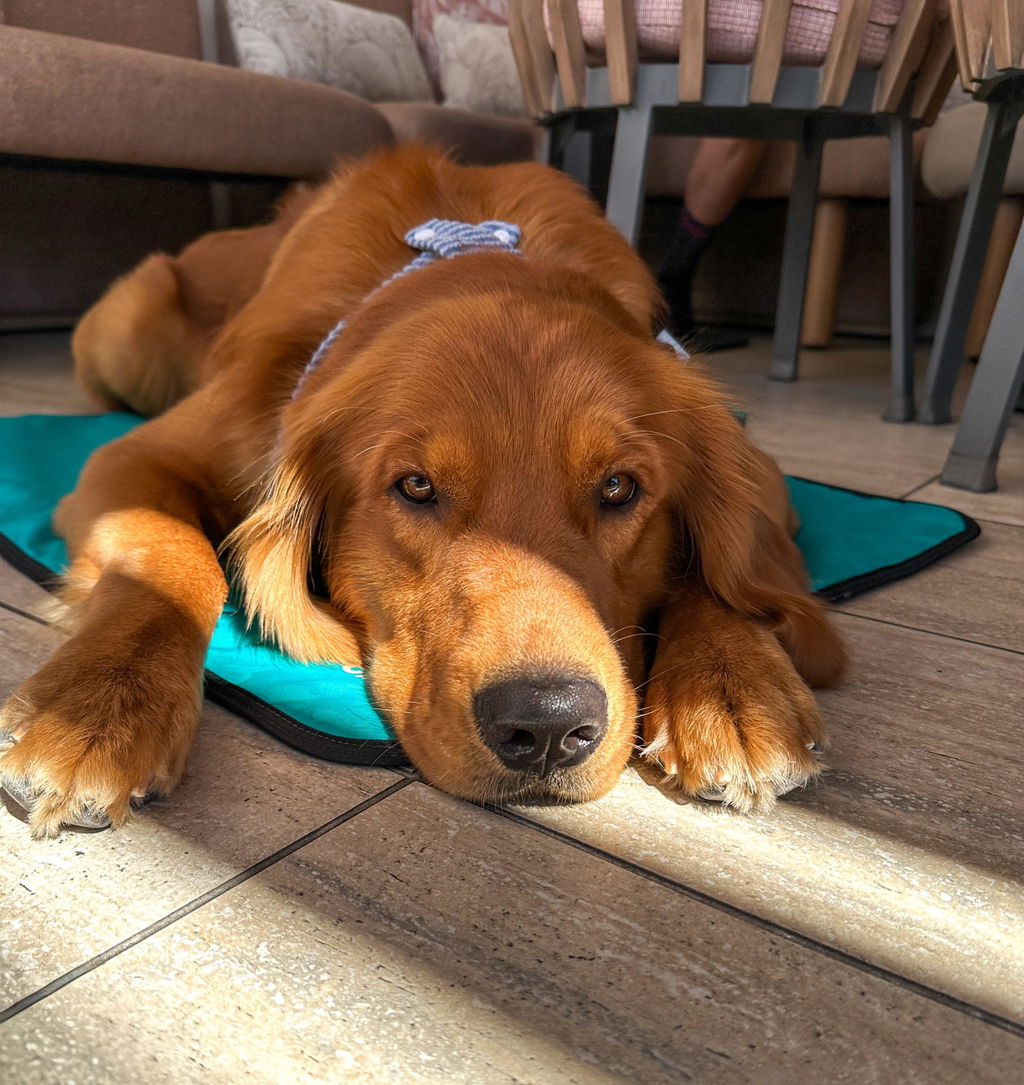
Here's the thing most owners don't think about: dogs are prone to lying in direct sunlight even when shade is available. They follow warmth, not UV indexes. If you want your dog to rest in the shade, you need to give them a reason to choose the shade — a familiar, comfortable spot that signals to them: settle here.
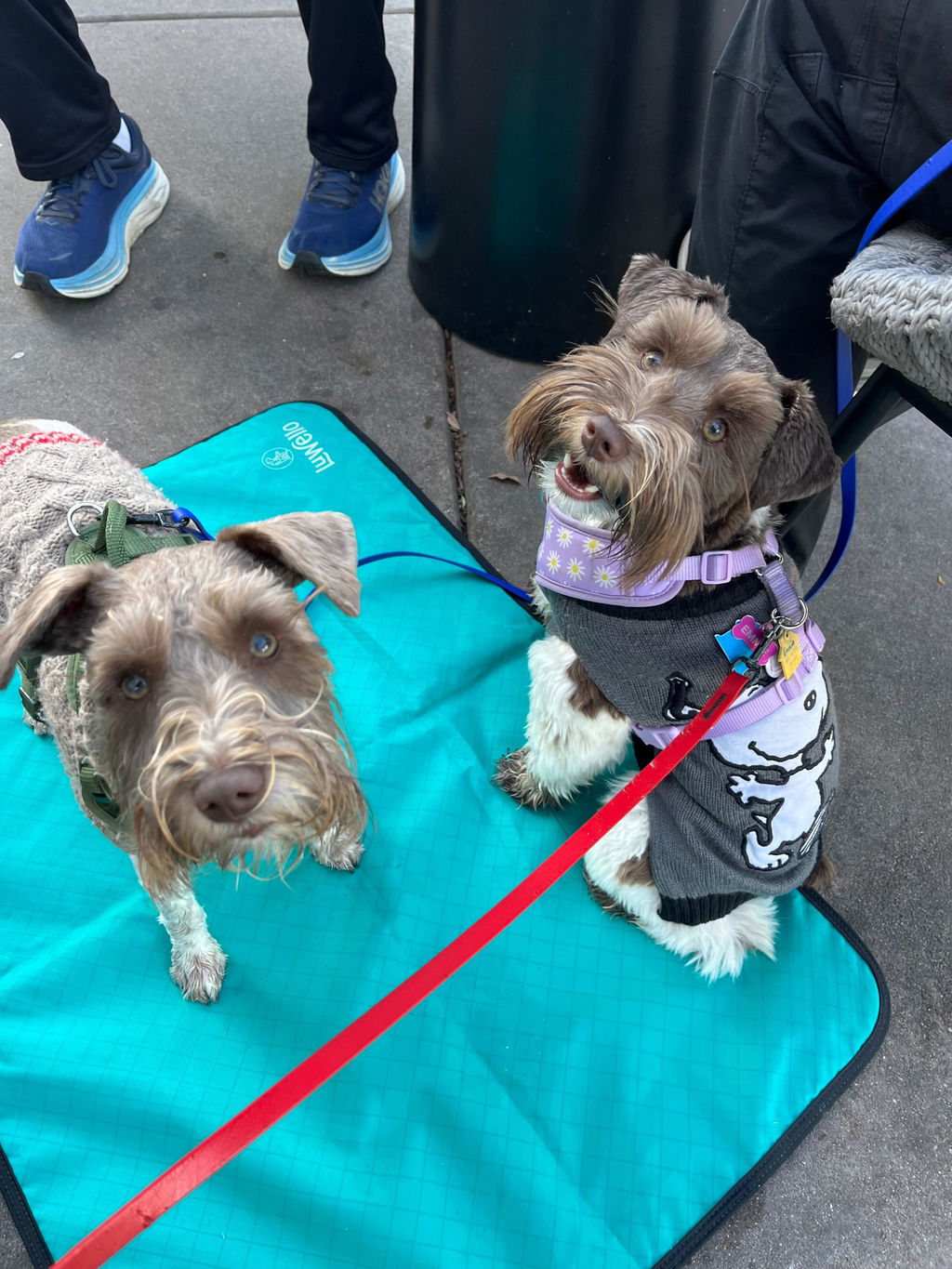
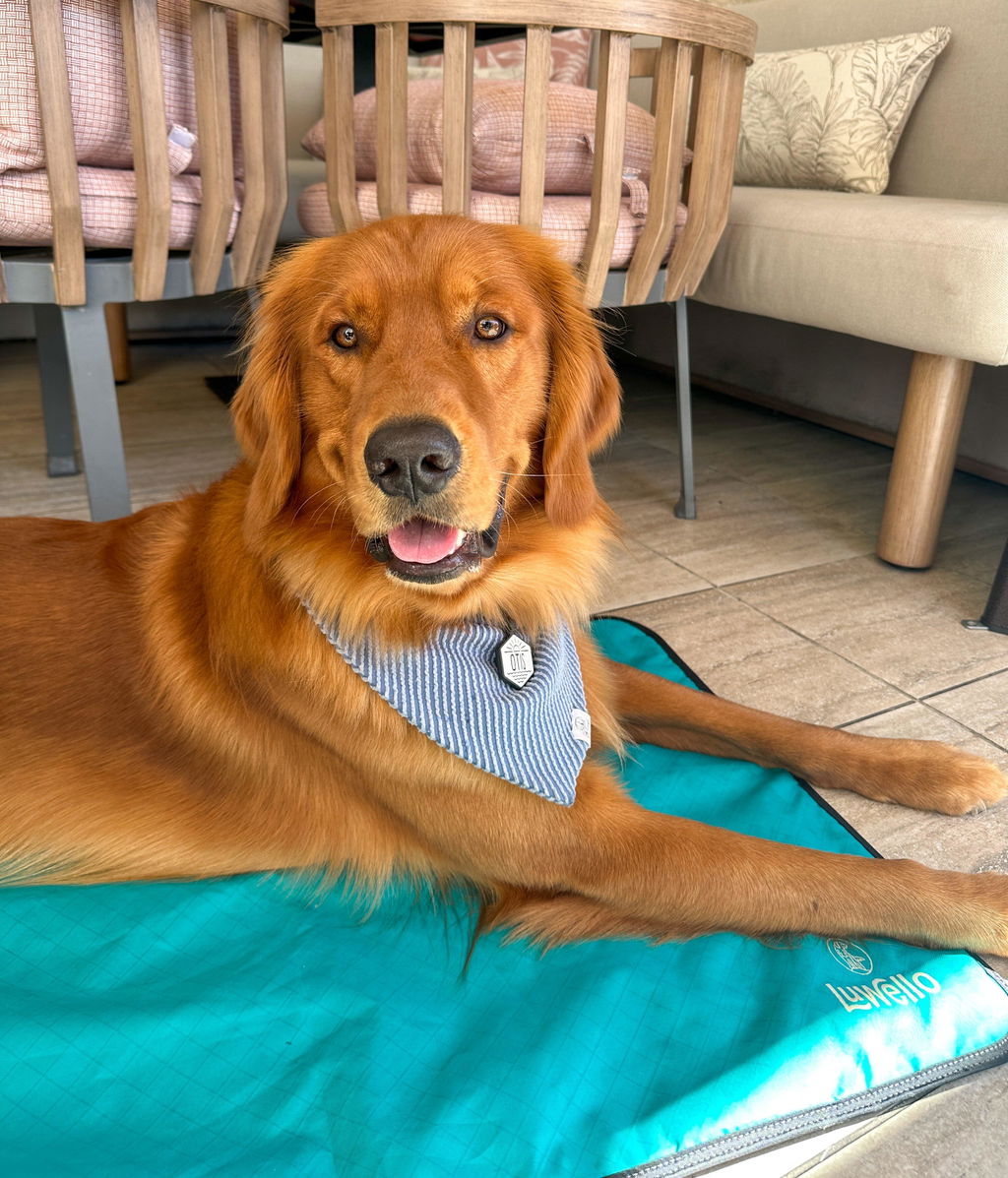
This is exactly what the Luwello Settle Mat is designed for. It's a compact, water-resistant mat made from eco-conscious materials and manufactured in the USA. Train your dog to settle on it, and it becomes their spot — wherever you are. Set it up in the shaded area of your yard, under a tree at the park, or in a covered patio corner, and your dog has a cue to relax in a protected spot rather than stretching out in full sun.
Dogs who are trained on the Settle Mat learn to go to it on cue. That means when you say "settle," they have a place to go — and if that place is consistently in the shade, you're building a sun-protective habit without fighting your dog every time they inch toward a sunny patch of grass.
Consider UPF sun shirts for at-risk dogs. For short-coated or light-skinned dogs who spend significant time outdoors, UPF clothing offers physical UV protection without the reapplication challenges of sunscreen.
Check the UV index before extended outdoor time. Most weather apps include it. Veterinarians generally recommend extra precautions when the UV index hits 3 or above.
The Bigger Picture
Luwello was founded after experiencing firsthand how devastating canine cancer can be. A portion of every purchase supports canine cancer research and clinical trials — including the kind of work being done by organizations like Ethos Discovery on hemangiosarcoma detection.
We make gear for dogs who go everywhere with their people. And we think the best thing you can do for a dog who goes everywhere is know how to protect them — not just from traffic or other dogs, but from the quieter risks that accumulate over years of sunny afternoons.
Check their skin. Know the signs. Give them a shaded place to settle.
It adds up.
This post is intended for educational purposes and does not replace veterinary advice. If you notice any unusual lumps, sores, or skin changes on your dog, contact your veterinarian.