
How to Teach a Dog to Settle in Public (It's a Skill)
Share
Most people buy an anxiety vest or a mat the same week their dog has a meltdown at a patio table. Understandable, but also backwards. Gear that applies pressure or gives a dog a place to hang out can absolutely help, research on anxiety wraps points to a real calming effect for a lot of dogs through the same swaddling response that settles a fussy infant. But a vest doesn't teach a dog what to do. It just makes the doing a little easier. The actual skill, staying in a "down" calmly while another dog walks right in front of them comes from repetition, not fabric.
That's the piece that gets skipped. If you're deciding between a pressure vest and a settle mat for your dog's public meltdowns, the honest answer is that the product matters less than whether you've actually trained the behavior it's supposed to support.
What "settle" actually means to a dog
Trainers distinguish "settle" from "stay" for a reason. A stay asks a dog to hold a position and stay alert, ready for the next instruction. A settle asks for something different: go to this spot, lie down, and disengage. No vigilance required. That distinction matters because a dog who's technically "staying" next to your table but tracking every plate that moves isn't relaxed, he's just obedient. The goal for public outings isn't compliance. It's a drop in arousal and a mastery of self-control.
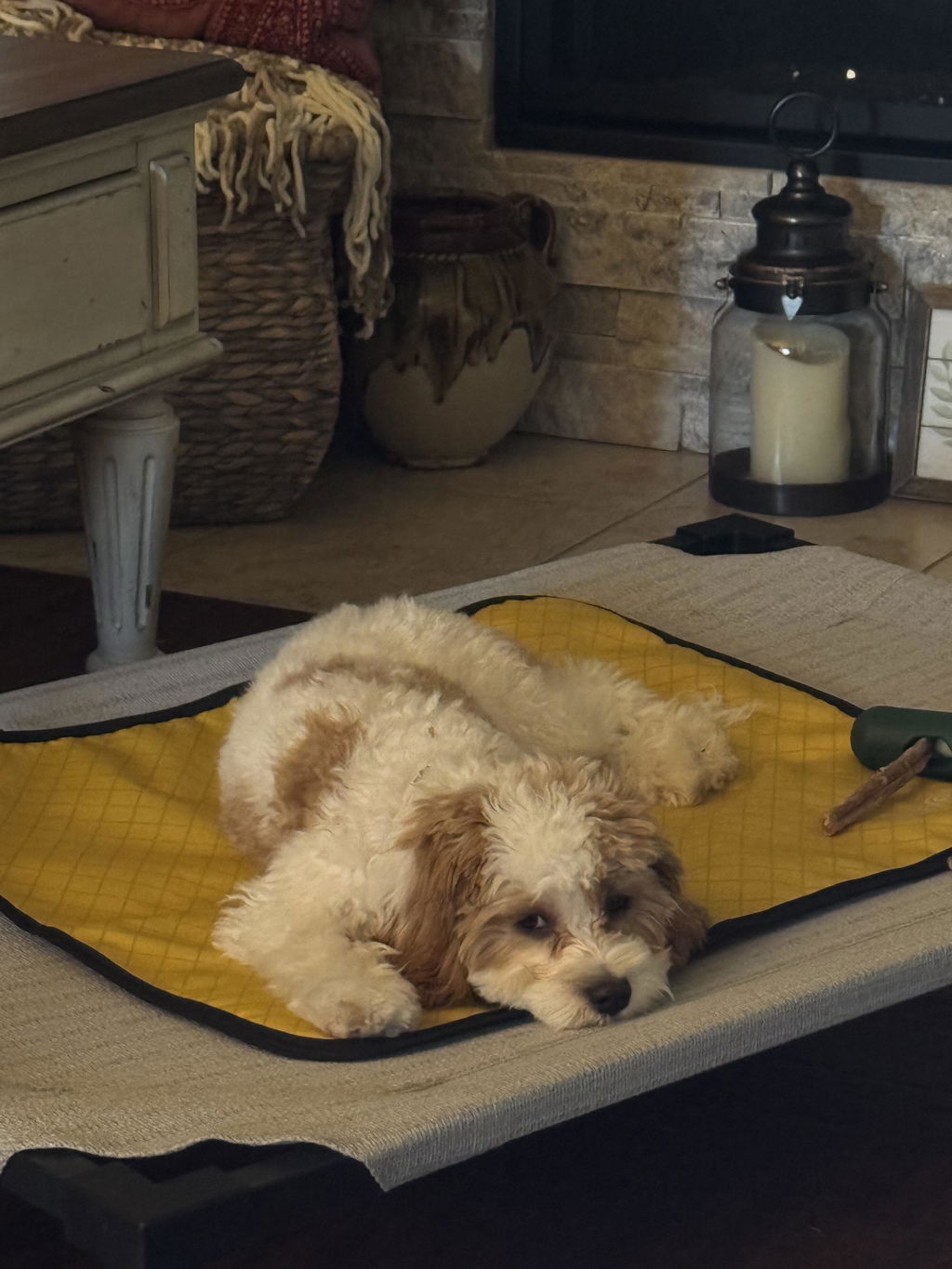
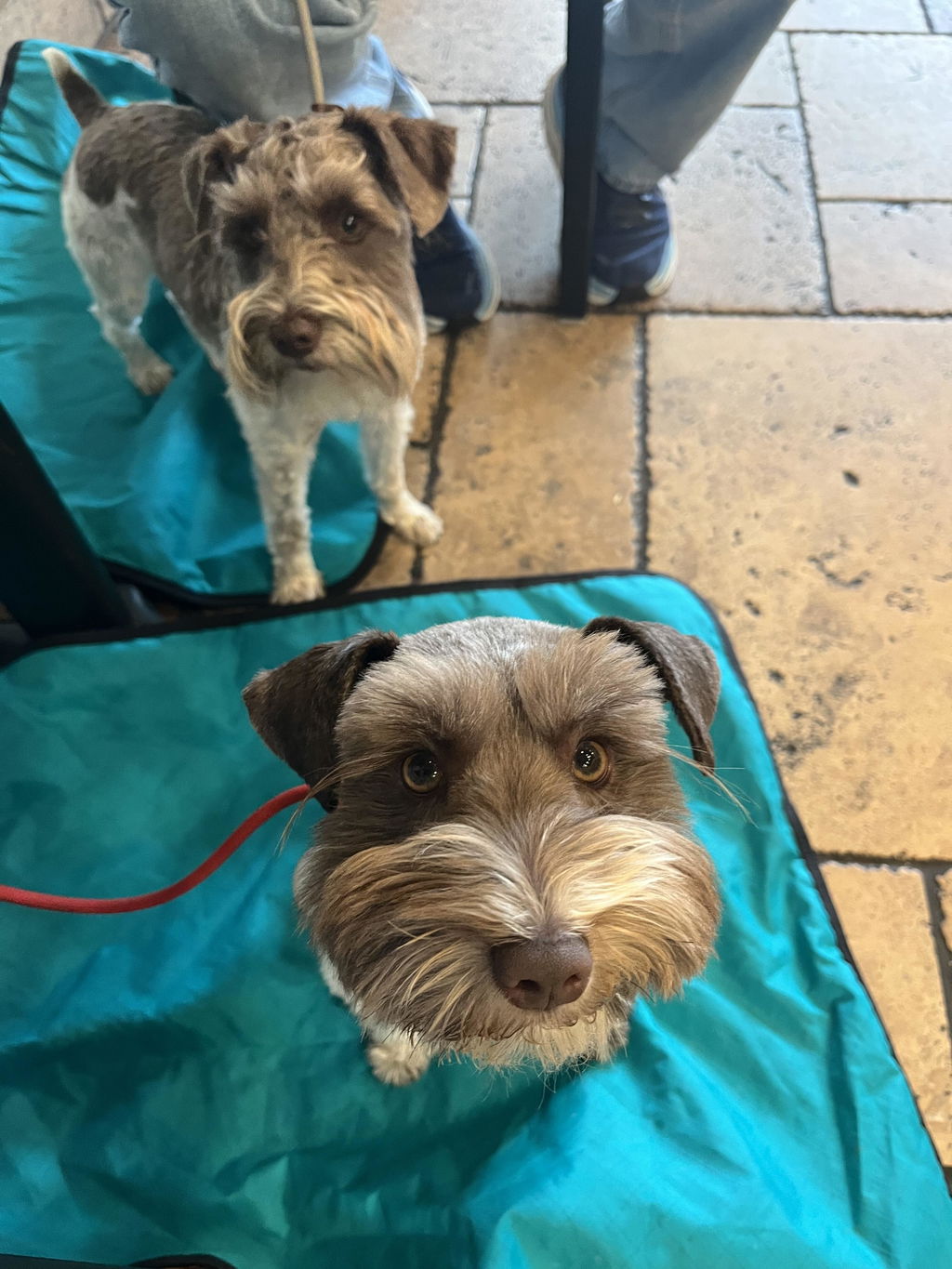
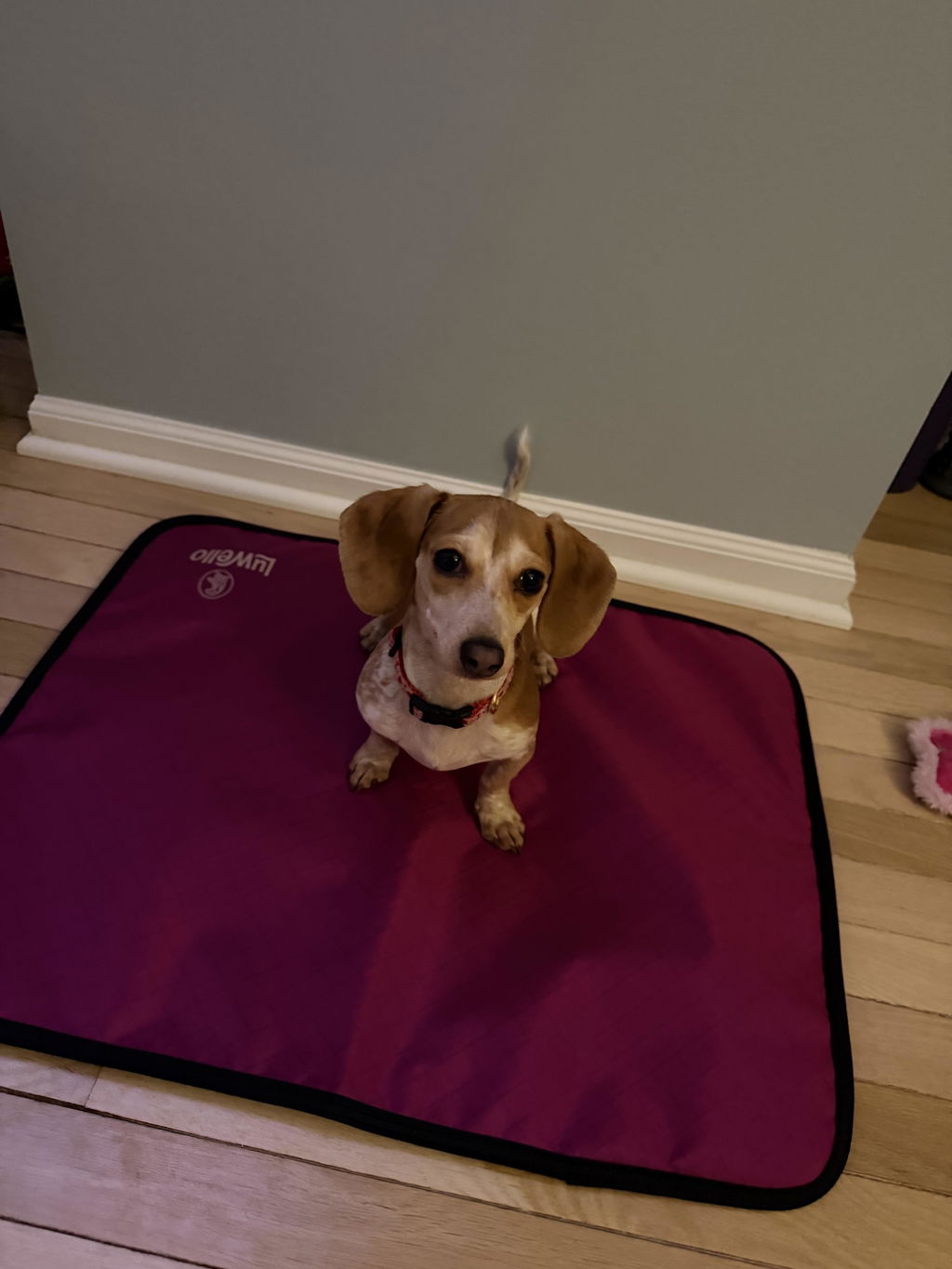
A mat gives that cue a physical anchor. Dogs generalize faster to an object they can feel under their paws than to an abstract verbal command, which is why trainers consistently recommend pairing "settle" with a dedicated mat rather than teaching it as a bare word. The edges of the mat become part of the instruction.
Why repetition is the actual mechanism
Here's the part that gets lost in vest vs. mat comparisons: neither product changes a dog's baseline stress response on its own. What changes it is controlled, repeated exposure, the same principle behind any desensitization protocol a behaviorist would use for noise phobia or leash reactivity. Every time a dog settles successfully on a mat in a slightly harder environment and nothing bad happens, that experience gets filed away. Do it enough times, in enough places, and the behavior starts firing before the dog even has time to get worked up.
This is also why so many owners feel like a vest or mat "stopped working." It didn't. The dog was never actually trained to settle, so the gear was doing 100% of the work with 0% behavioral backup, and gear alone tops out fast.
Building the practice routine
Skip the instinct to test this at a crowded farmers market on day one. Build it in layers:
1. Home, zero distractions. Lure your dog onto the mat, mark the moment they lie down, reward. Repeat until they're walking to the mat on their own before you've even said anything.
2. Home, duration. Once the down is automatic, start stretching the time between reward and release. A few seconds, then longer, then a full commercial break's worth. Release with a clear word every time so the dog learns the job has a defined end.
3. Home, mild distraction. Doorbell sounds, a family member walking past, the vacuum in another room. The mat should stay the dog's job even when something interesting happens nearby.
4. New locations, quiet. The backyard. A friend's living room. The parking lot outside a store before you go in. This is where a lot of training falls apart, because a behavior learned in one room doesn't automatically transfer to a new one. Dogs don't generalize the way people assume they do. Resist the urge to give up if you and your dog fail at this the first few times!
5. Public, low-stakes. A quiet corner of a pet-friendly store, an outdoor table at an off-peak hour. Short sessions. End before your dog starts struggling, not after.
6. Public, real conditions. The patio, the market, the vet waiting room. By now the mat itself should be doing a lot of the emotional labor, because your dog has hundreds of reps of "this object means I get to relax" behind it.
Somewhere around step 4 is usually when a vest earns its keep, layered on top of training that's already underway, not standing in for it. The gentle pressure can take the edge off a dog's arousal just enough that they're able to engage with the mat routine instead of shutting down or checking out entirely.
The mistake most people make
Skipping straight to public, high-stakes environments because that's where the problem shows up. It's the equivalent of trying to learn a language by moving to a country where nobody speaks yours. Technically exposure, but its mostly just stressful. The dogs who end up relaxed in public are almost always the ones who did the boring reps at home first.
Where a mat fits into all of this
A settle mat works well for this process specifically because it's portable enough to bring on every single rep, from the living room to the patio table, so the physical cue never changes even as the environment does. If you're still weighing whether a pressure vest, a mat, or both make sense for your situation, our full breakdown of anxiety vests versus settle mats covers the mechanics of each. This post is really the missing chapter: whichever gear you land on, the training underneath it is what determines whether it works.