
How Tether Training Helps Dogs Settle Faster
Share
If you’re using your Luwello gear to help your dog learn to calm and self-soothe, this guide will walk you through a safe, humane, and effective tether + mat training method.
✅ Why This Training Matters
Many trainers and behavior professionals recommend teaching a dog to “settle” on a mat as a foundation skill. It helps a dog build a calm emotional state and a reliable behavior (“go to mat / place”) instead of reacting to stressors. Professional trainers like Crosby’s Canine use the specific combination of a tether and a settle mat boundary to create 'neutrality' in high-distraction environments. It’s the gold standard for preparing a dog for public access.
When done properly, it can reduce over-arousal, destructive behaviors, and give your dog a reliable “safe spot” at home or on the go.
🧰 What Tether + Mat Training Actually Is
- Tethering (using a hands-free leash or short indoor lead attached to a sturdy anchor) gives the dog a small, defined space. It’s used only under supervision and when the dog has access to a comfortable resting place. Using a Hands-Free Leash as a tether is superior to a standard leash because it provides a consistent 'passive' boundary. When the leash is attached to your waist or a sturdy anchor, the dog learns to self-regulate against a fixed point, rather than reacting to the 'chatter' or tension of a human hand holding the lead.
- Mat training teaches the dog to lie or settle on a mat/bedding under calm conditions. Over time, the dog learns to associate the mat with calm, safety, and relaxation.
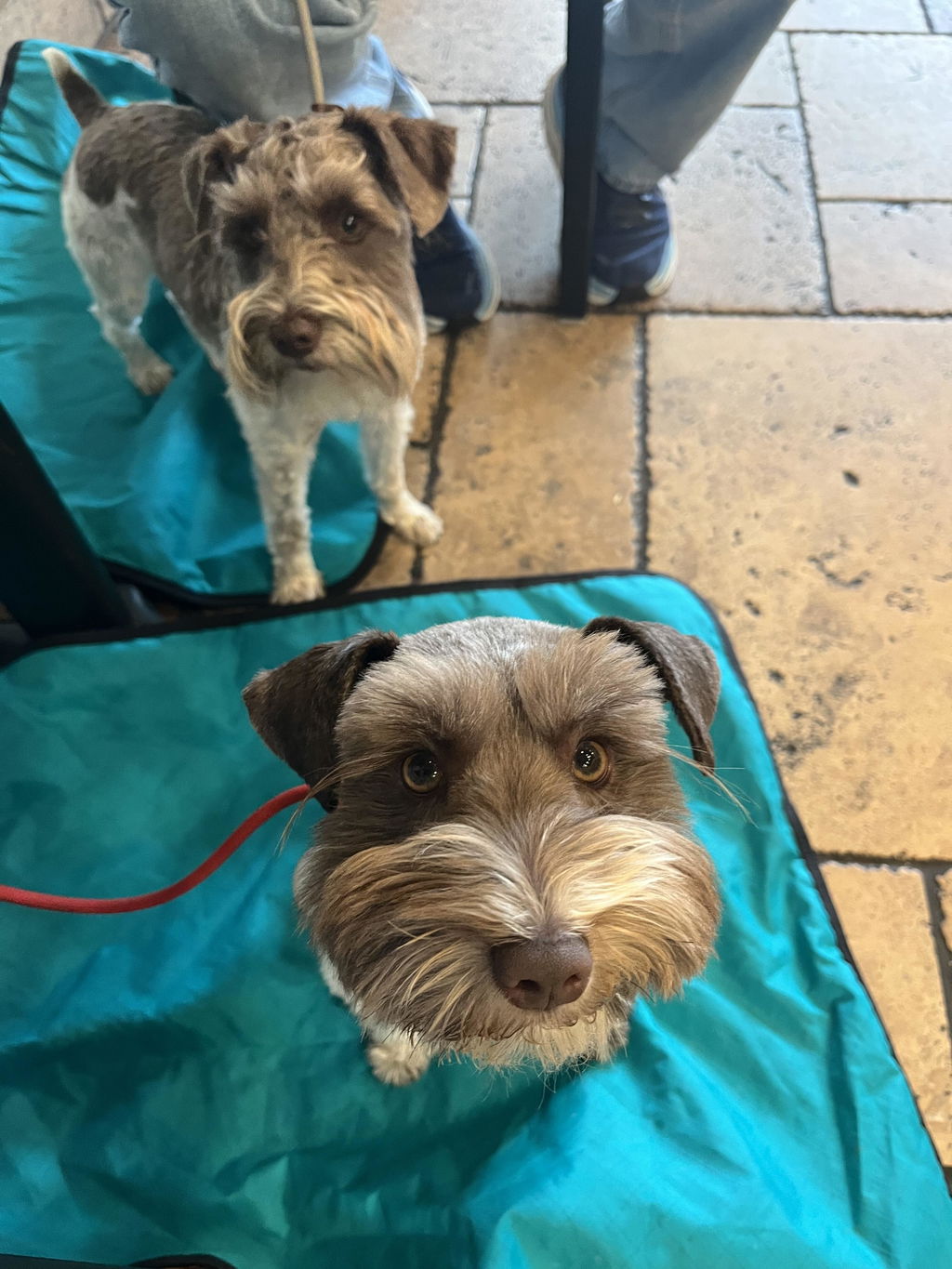
- The Right Surface: Using a technical, waterproof ECOPAK™ mat prevents your dog from absorbing cold or moisture from the ground, which is a major reason dogs "break" their settle in public.
- Together tether + mat training creates a “tether station”: a defined space where the dog can relax safely, and you can work nearby.
Because you control the leash length, you’re not restricting forever. This is a temporary, supervised tool, not a permanent confinement or tie-out. That distinction is critical.
🐾 Ground Rules: Humane, Safe & Effective
-
Always supervised — never leave tethered without human presence.
- Tether time must be observed so you can intervene if the dog becomes distressed or entangled.
-
Use a harness (or safe body attachment), not a choke/prong collar.
- If the dog pulls or lunges, a harness avoids neck / airway damage.
-
Tethering must never be punishment or associated with scolding.
- It’s a management and training tool, not a correction tool.
-
Keep early sessions short, supervised, and low-distraction.
- Avoid overwhelming your dog; start simple, calm, and predictable.
-
Use long-lasting chews or safe enrichment during tether sessions.
- This helps shift focus from restlessness to calm behavior.
-
Always reward calm, quiet behavior — never reward whining or frantic behavior.
- Calm should earn rewards. Whining, barking, or pulling should not.
-
End sessions with a gentle, unemotional release — no over-the-top praise or correction.
- This teaches the dog the “mat time” isn’t a drama zone — just a calm zone.
🏁 Tether + Mat Training Protocol (Step-by-Step)
Before you begin: make sure your dog has already had sufficient exercise, bathroom break, and mental stimulation. See our guide for indoor training ideas to tire out your dog before settle training, if needed. Over-aroused or energetic dogs often “fail” settle training because they haven’t burned off drive yet.
Step 1: Build Mat Familiarity (No Tether yet)
- Lay out the mat in a quiet, low-distraction room.
- Use treats to lure/shape your dog onto the mat. Reward calm behaviors (sit, down, soft eyes, relaxed posture).
- Introduce a verbal cue (like “settle” or “mat”) once the dog begins offering calm behavior consistently. Gradually increase time on the mat.
- Practice several short mat sessions per day. Build a strong, positive association before adding the tether.
Step 2: Set Up a Supervised “Tether Station”
- Attach your Luwello hands-free leash to your dog's harness, not a collar.
- Anchor the leash to a stable, heavy, immovable object (sofa leg, furniture, built-in hook anchored in wall).
- Leave about 3–4 feet of leash length — enough for stand / sit / lie down, but not full roam.
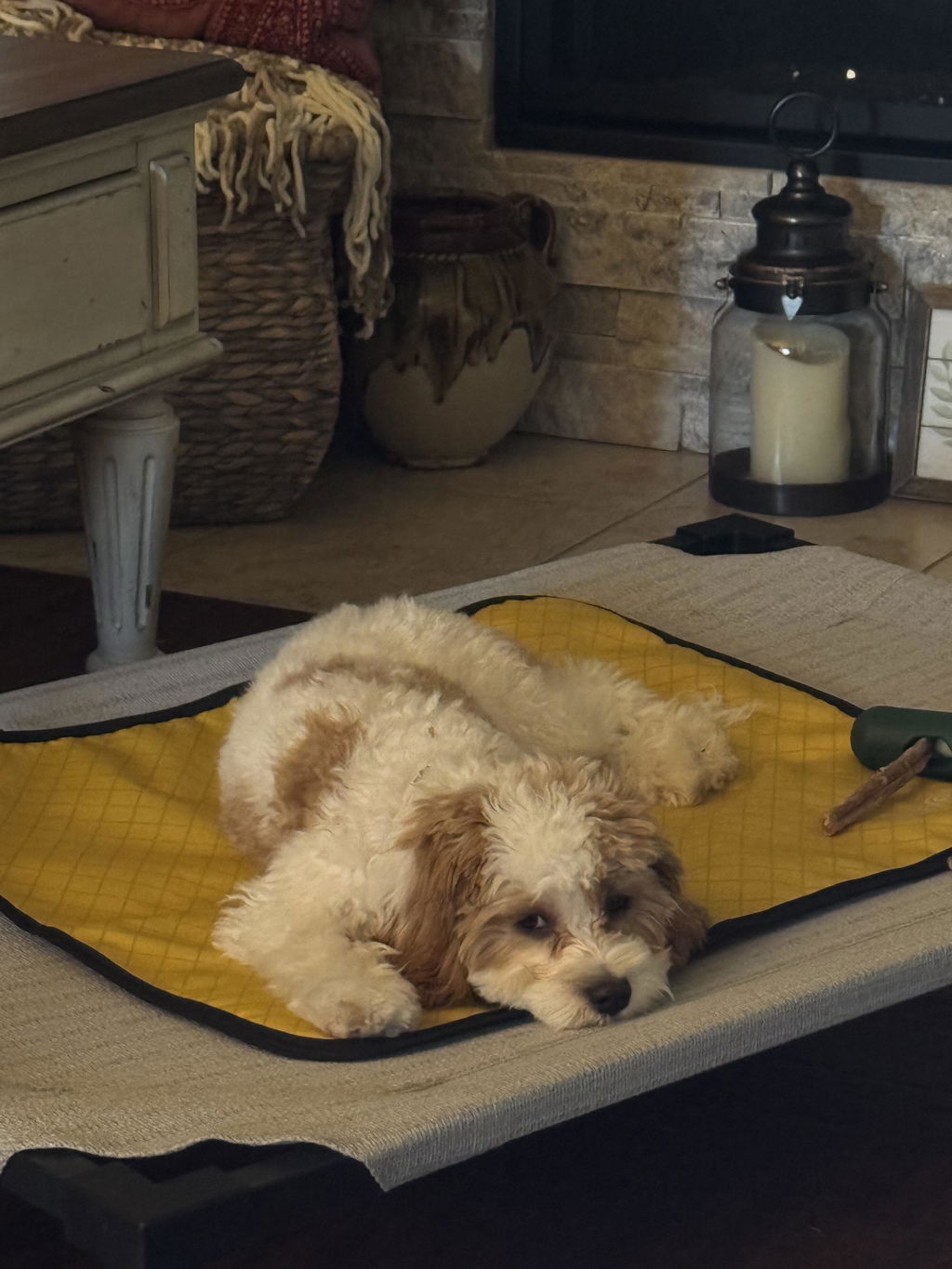
- Place the settle mat directly under/just inside the leash’s natural reach. Add a long-lasting chew like a woof Pupsicle or toy on the mat.
Step 3: First Tether Sessions — 10–15 Minutes
- Calmly lead your dog to the mat, anchor the leash, give the chew — then sit nearby and ignore them. (Reading a book, checking email, just be present, don’t make it dramatic.)
- If your dog lies down or chews quietly — every minute or two, drop a treat on the mat or praise quietly. Reward calmness, not noise or frustration.
- If the dog fusses, whines, or barks — do not soothe or scold. Wait quietly. If your dog is struggling with over-arousal, check out our post on Tiring Out Your Dog Indoors before your next session. If after a reasonable time (a few minutes) they calm, reward. If distress escalates into panic (heavy panting, leash pulling, frantic barking), calmly end the session, remove the tether, offer water or a break.
- First sessions: keep them short: 10–15 minutes.
- As dog succeeds, gradually lengthen to 20–30 minutes, but monitor closely.
- For additional ideas on how to use your hands-free leash in between sessions, see our guide on how hands-free leashes work.
Step 4: Progress Slowly & Generalize
Once your dog reliably settles tethered in a calm indoor environment:
- Try moving the tether station to a more livable room (kitchen, living room), or during everyday activity (work at home, cooking, reading).
- Practice “settle" under small distractions (family walking by, laundry, normal household noise). Increase distractions gradually only if your dog stays calm.
- Over time — and only if safe — consider removing the leash while still using the mat + cue “settle,” to see if your dog can self-settle on cue. That’s the end goal of mat training.
⚠️ When to Pause & Get Help
This method should not be used if:
- Your dog has severe separation anxiety, fear of confinement, or panic reactions. Tethering can worsen these issues.
- The dog is prone to aggressive behavior under stress, or already resource guards heavily. Tethering restricts their escape route and can escalate fear/defensive behavior.
- You cannot supervise. Leaving a tethered dog unsupervised is dangerous and against humane training standards.
If any of these apply, please consult a certified, reward-based professional before proceeding.
💡 Why This Method is Best
- Positive reinforcement — calm behavior earns treats / safety / comfort.
- Builds emotional regulation and self-control, not fear or suppression.
- Encourages a voluntary “safe space” (the mat), not forced confinement.
- Supports long-term wellbeing, trust, and behavior stability.
📝 Bottom Line
The Luwello settle mat + hands-free leash can be an excellent tool to help your dog learn calm, self-soothing, and strong settle behaviors, but only when used humanely, thoughtfully, and safely.
Follow the steps above. Start slowly. Reward calm. Supervise always. And value emotional well-being over quick obedience.
If you’ve done that, you’ll be giving your dog a skill that lasts for life: the ability to relax, even when life is busy.
Ready to upgrade your outdoor kit? See our Top 5 Gear Essentials for Hiking with Dogs.